
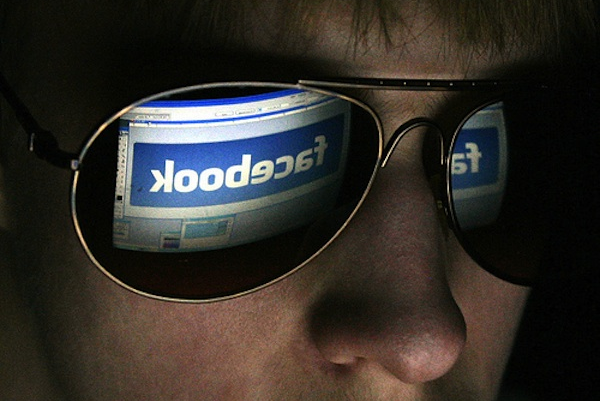
Twitimidation

Tuesday, December 1st, 2009

In my last post here on CT, I spoke of not being afraid to jump right into the social media pool and start paddling, not worrying about whether you really knew what was going on or what’s what. So I thought I’d continue that trend and talk (briefly) about that beacon of social media possibilities, lighting the way for all others, that pinnacle of Web 2.0 achievement, the place to be on the Net, because if you’re not–and we’re just being honest here, right?–you’re a nobody, a boob, and a general failure as a 21st century human being. Alright, a bit too far with that last one.

I’m talking about Twitter, my friends, and while I may have put the shine on a bit too thick just now, one might be remiss in underestimating the value and power of Twitter. Now I’m not going to tell you what Twitter is; everybody probably has at least a general idea of it, except perhaps David Letterman.

This isn’t a guide by the way, I figure that’s been done already, and more skillfully than I could probably manage. Also I realize that many of our readers will be familiar with all this, but maybe, just maybe, some of you don’t know. Maybe some of you are like Dave there, afraid of  Twitter or anything social media-like. Let us not forget the beginner’s mind; it never hurts to review the basics right?

One of the complaints I’ve encountered when people talk about trying Twitter, or not as the case may be, is that they simply don’t know what to say. Or having said something, they fear they will look the fool for throwing it out there into the great Twittersphere. I understand; know that you are not alone friends, Twitter can be a little intimidating for some, and there is a non-trivial learning curve. I know after creating my Twitter account that I felt a bit overwhelmed and not a little confused by it all. Pile on top of that the fact that it’s kind of hard to follow conversations that you encounter with people you follow because they’re talking to someone else(this is less of a problem now, especially given the plethora of high quality Twitter clients available).

I introduced a close friend of mine to Twitter a while back, and noticed she wasn’t really tweeting much—OK, not at all really aside from her introductory, ‘Hey world!’—and since we communicate regularly through other means, like the primitive phone, I asked her why that was. She told me she wanted to tweet, but every time she brought up the update box, she just froze. She couldn’t think of anything important enough to say, and didn’t think anyone would be interested in what she was doing every minute of the day.

Behold, two common misconceptions regarding Twitter! You don’t have tweet about everything you do, and if you did,  you would be right that no one would want to know what you’re doing every minute, and you would end up alone and followerless. But, if some of your friends were following you they might want to know that you are, (a) under the weather, (b) dying, or (c) just having a crappy day in general. Your tweets don’t have to be earth shattering revelations, or hot breaking news, unless perhaps you are @MSNBC (in that case carry on). You don’t have to sit and wait for the muse to hit you on top of the head with profound and pithy attestations (I looked at my word-a-day calendar this morning). Think of Twitter as a community of potential friends. I mean they don’t call it social networking for nothing right? Instead of worrying about being important or popular, why not share a link to a site or video you thought was interesting; if you thought it was interesting, somebody else just might as well. See an article that made you so angry you wanted to scream? Link it in a tweet, make others aware of it.

Keep in mind that we’ve been coming at Twitter from a more or less personal angle. More and more businesses are hopping on the social media wagon; maybe your company already has. It would behoove anyone in today’s market to familiarize themselves—at least somewhat—with the flexibility and power of Twitter, and other social media outlets. Earlier this year, Business Week put together a special report which speaks directly to executives on the wonders and possibilities of social media for their companies and/or brands.

And it’s not just larger corporations that are slowly realizing the benefits of social media involvement; small businesses are picking up on the vibes and possibilities well. Again from Business Week, this article discusses some advantages for business owners and tips on how to get started, and why. And if you check out that article you might notice the advice uncannily echoes a running theme in this post, and my last one: Don’t worry about the small stuff, jump on in and get wet.

Here are links to a couple of guides for Twitter. There are a gabillion of them on the Net, but these were most helpful to me. Good luck!

  1. Squidoo’s Twitter Tutorial. It even has a video!
  2. Mashable’s Awesome Twitter Guide Book.

Jamie slogs through cyberspace in his free time, learning whatever he can, writes short stories, and tends his own blog www.residuetiger.com. You can follow him on Twitter as well: @residuetiger.

Social Media Rigor Mortis: How Behavior Kills Value

Thursday, November 19th, 2009

We’ve all seen it. What once worked in social media six months ago doesn’t work now. Why, for instance, does a large following on Twitter no longer indicate influence? Or why is blogging no longer as impressive as it was in 2003? Both these examples follow a predictable economic formula:

As “x” social behaviour multiplies, its social value approaches zero.

Let me break that down for you. The more you do the same thing, people’s appreciation of it lessens. The more you do the same song and dance, don’t be surprised if your audience dwindles. This should be obvious, but it’s not.

LiveJournal: An Example

Most of us think of LiveJournal as the walking corpse of the social media world, but it wasn’t always so. It was one of the first platforms to combine blogging with social networking. More fascinatingly, people who had a LiveJournal felt it gave them status: in order to have one, you had to be invited.

Then it happened. Danga Interactive, LiveJournal’s parent company, removed the invite requirement. Soon everyone who wanted one could have one. This was the beginning of the end.

The problem was everyone wrote about the same things: breakfast, cute kittens, and favourite movies. LiveJournal succeeded in the task of being a journal, but as the novelty of public journalling wore off, so did its perceived value. Soon, users left LiveJournal for the unique feature set of MySpace — and we all know what happened to MySpace.

State of the Social Media Union

Most popular social media tools have their time in the sun then go through a slow rigor mortis. Usenet was once the reason people paid for Internet. Chatrooms were how people dated online. MySpace was a “place for friends”. What happened?

Everyone was doing it, and everyone was behaving the same way. Usenet became so burnt out over flame wars, the term “troll” was coined and “Godwin’s Law” became a law. The acronym “ASL” became such an overused greeting in chatrooms, their very purpose became sexual gratification. As for MySpace, “making friends” became the basis of many a Catch a Predator episode.

We are seeing the same pattern of behavior happen on Twitter, Digg, and Facebook — and if people keep doing the same things, those social networks will soon have less social value than they currently have now.

How Can We Add Value?

The social media slide into rigor mortis is not inevitable. The only way to reverse the lessening of social value is to give your audience value. That is to say, behave in a different way from everyone else. If a platform is flexible enough for innovative forms of communication, and if communities are courageous enough to move beyond their own cliches, social media can thrive.

Want to remain relevant in social media? Behave differently.

Reblog this post [with Zemanta]

Social Media is Not Dead. It’s Run by Cats.

Thursday, July 2nd, 2009

Humans think they’re such hot stuff.  Them and their opposable thumbs.  I’ll have you know that us felines are really the strength behind Twitter.  Don’t believe me? Apparently the San Diego News Network does:

Brians_cat and Petco haz a conversation

Brians_cat and PETCO haz a conversation

That’s right folks.  PETCO pays Natalie Davis, Director of E-commerce to talk to pets.  We even convinced her to get her cat Leo to start getting up and running on Twitter.

We cats are better equipped than you humans for taking over the social media sphere anyway.  Here’s just a few signs of our prowess:

  1. The expression is LOLCats.  Ever see a LOLhuman? Pssh.
  2. Cats sleep 18 hours a day, so we’re better rested.  Besides, humans are always too busy “working” to mess with Twitter as we cat professionals are.
  3. We outrank you.  @Sockington has 3/4 of a million users following him on Twitter.  Ashton Kutcher and CNN are clearly fronts for the feline empire.
  4. Twitter is a bird.  Cats catch birds.  We’ve caught you.

Image credit: Twitkitteh

This has been an informal update by Brian’s Cat – if you want more informal thoughts, follow me on Twitter.

Social Bites – Like Sound Bites But Different

Friday, February 20th, 2009

We are all used to “Sound Bites” – a short few seconds of words which are normally taken out of context to create sensational headlines. Few people realise that speech writers have for years worked on developing speeches to include a couple perfect “sound bites” for use by others.

Of course while some social media is audio based we are much more likely to rely on humble text to create a “social bite”.

What Is A Social Bite?

A social bite is a short piece of text to describe an article, post or idea which is easy to understand and easy to distribute through viral networks. A social bite must still carry the post’s message and goal but in a way that quickly impacts with users in essence:

A “social bite” is a short, concise and engaging message to gain traffic on social networks

The Perfect Social Bite

Anatomy of a social bite

So what makes the perfect social bite, well it has two parts the hook and the line.

The hook are the words within the message – the thing to grab attention. This is doubly important as the hook will have no context once it has left the site. For example a hook is unlikely to reference the site so must be compelling, so that someone would visit the page without knowing where they were going.
The line is simply the url, sometimes this will be the page url but more likely to conserve space a url shortening service would be used. This compounds the need for a good hook as the only other potential reference to the site will be hidden.

The Twit Effect

Most social bites these days will have to pass through twitter at some point therefore a bite needs to be suitable otherwise people might change it. A normal tweet has a limited number of characters but while it may be tempting to use all 140 possible chars, this would severely limit the maximum potential of the social bite as it fails to take in retweets therefore the maximum number of characters is much more limited.

Twitter does not allow usernames longer then 20 characters and only shows usernames of 15 characters this means in practice to cope with every possible twitter name we would need to save at least 25 characters for retweets (20 for the name plus RT and two spaces one between rt and one after name and an ampersand before the name) even assuming 15 character names thats still 20 characters out of our 140.
With characters at a premium is it reasonable to expect usernames of 15 characters?

Taking a list of 1000 twitter usernames revealed the mean average length is 9 characters:

  • 0-6 – 13%
  • 6-9 – 58%
  • 9-12 – 27%
  • 12+ – 2%

taking these results its possible to assume the space needed for a retweet is 17 characters

Line Length

Assuming use of shortening service allows us to roughly determine how much room the line is going to take up. Its worth remembering users often swap out the url in favour of their own shortening service so as to gather statisitcs for themselves therefore even if your URL is shorter then the average it could be worth including a buffer.
Looking at various shortening services the average length is 18 characters including the http:// therefore the line length should be at least 18 characters plus a space making a line length total reserve of 19 characters.

Final Social Bite Anatomy

17 Chars Reserved Space for Retweet
104 Chars Hook / Message
19 Chars ShortURL (TinyURL, zi.ma, cli.gs etc)

A hook within a social bite can potentially be longer than a page title, which in turn is not necessarily the same as a page headline.
It may also be important to allow for additional commentary to support the predetermined social bite, or to allow for SEO friendly URL shortening which can also boost response.
A single article can have multiple social bites that will attract different audiences.

Propagating a social bite

There are three routes to start a social bite on its move

  1. Inject the hook without the line into your post article in much the same way as a sound bite works
  2. Add the sound bite into the social networks yourself
  3. Get someone else to do it for you

Of course you can always do all 3.

Tims live feed on Facebook
Many people reading this article may be thinking its very much twitter based but social bites have a tendency to cross social networks indeed that is the very point, and with social aggregators like Friendfeed and to a less extent Facebook something which starts on Twitter could well end up anywhere even getting to the ears of non twitter users such as myself

Do you use social bites? What other things should people think about?

Editor’s Notes (Andy)

Tim popped out to a bloggers meetup of Northern Gits Geeks, thus just adding a few additional references.

Dan Zarella recently took a scientific look at reteets over on Mashable
Louise wrote a similar article over on Twitip, but that was mainly aimed at retweeting tweets that originate on Twitter, where you know the length of your own Twitter usename.
Guy Kawasaki went into the psychological side of retweeting over on the open forum.

The 3 C’s of Twitter

Monday, February 16th, 2009

Many of you have heard of the 3 P’s of marketing: pills, porn, and poker.  They are the bane of most people’s online existence, as we are constantly bombarded with seeing these kinds of “offers” being sent to our spam filter.

Enter Twitter.

As you know me by now, I like to look at the positive things in life.  And after navigating through Twitter for some time, I’ve found that Twitter has the 3 C’s:

1 – Cats:

Sometimes a good lolcat can put you in the right mood. We can work endlessly on a killer blog post and a funny cat pic and caption will beat the post 9 times out of 10, though though Mr. Nielsen may disagree.

2 – Coffee:

I’ve put out breaking news and useful links, but tend to have more conversation when it’s around coffee time talk.  @DunkinDonuts has achieved its twitter fame.  Coffee Groundz, a local Houston, TX coffee shop, literally doubled their clientele through twitter by being the first company on record to accept orders through Twitter.

3 – Comedy:

Everyone needs a good laugh once in a while.  Sometimes particular accounts aren’t what is funny, but rather what you find via Twitter.  @Octane pointed out that he found this great piece from the Onion.  The Twitter song is rather amusing as well:

Let’s add in a 4th C, just for fun!

4 – Common Sense.

As always, common sense still applies to the Twitterverse as well.  Don’t have a public meltdown, feel free to post news on latest and greatest apps, and by all means, be careful what you say.

Social Media Housekeeping for 2009

Friday, January 23rd, 2009

You may have noticed a few small social changes that we’ve instituted for 2009:

Twitter.  We’ve been quiet on this front for far too long.

While it won’t be all of us running the account, expect some solid updates from @nowsourcing and @thegypsy.  Why follow? Well, we have some interesting things to say and will also be sharing great links collectively.

Google Friend Connect. You might call us Collective Forgetfulness if we didn’t have the latest and greatest blog widget from our friends at Google.  So we’ve added Google Friend Connect.  It’s an interesting concept, and will be fun to see what people make of it beyond the simple “here are the friends that like my site.”

MyBlogLog.  You might say that this is old news, but we updated the MBL widget to the more sleek, iPhone looking UI.  What’s really interesting about MBL is the community/site itself beyond the widget.  Personally, I’ve liked the service for a long time because it allows you to visually see who your recent visitors are – a different crack at the data vs. a more 1’s and 0’s Google Analytics approach.

What about you – what have you done to make your blog more social for 2009?

Interview with Matt Daines of Twellow

Tuesday, December 23rd, 2008

With us today is Matt Daines, lead developer of the popular Twitter directory, Twellow.  Twellow just released Twellowhood, so we thought now might be a good time to check in with him and see how things were going.

1.  Give us a bit of background about yourself.

Originally from Utah, I’ve been in the IT industry for over 13 years, having worked as a programmer/designer in various family-owned businesses ranging from medical transcription to e-commerce retail and distribution. I left the family business to return to school a few years ago, and I received my Bachelors in MIS from Utah State University in 2007. Upon completion of the degree I worked briefly for a large printing company, which I did not enjoy (it took over a month to get my computer). I looked around, found iEntry, Inc., and felt the company fit nicely with my skill set. It’s been good to be back in a smaller company where everything is not red tape. For the last several months I have been working as the lead developer for Twellow, along with various other duties at iEntry.

2. Where does the name Twellow come from? What made you go forth with this idea, considering the sheer number of Twitter related sites out in the space?

The name Twellow was something Rich Ord (CEO and Founder of iEntry) and I came up with together. We were discussing the whole concept in it’s early stages, and the connection was made to the yellow pages. While I was looking at the various “tw” apps associated with Twitter, the combination of Twitter and Yellow came together, as in “yellow pages”. The first name that came up was twellowpages.com, and we were going to go with that, but as I started looking more into it I thought a shorter name would be better. Twellow.com was available, so Rich jumped on it.

We went forward with the idea since there really weren’t any useful Twitter directories at the time. Twellow has been around since May and there have been a lot of Twitter apps that have come online since then, but I feel Twellow remains the premier directory service for Twitter. And Rich’s vision for where we want to take Twellow is fairly significant.

3. How do you plan to allow developers to hook into your system?

We are looking at various ways that our system could be opened up to outside developers, and have a limited API in operation currently to allow the grabbing of the categorizations for certain users. With the recent deployment of TwellowHood we have more options for providing demographic data that could be used by others.

4. Tell us what inspired you to come up with Twellowhood.

TwellowHood was Rich’s idea. He’s always recognized the power of location-based search, and we’ve been talking since the beginning about ways to make Twellow more geo-targeted. It’s just been the last month that we’ve really focused on it and found the tools to make it happen.

5. What are the advantages of claiming your profile?

The main advantage is that users can control their own listing. Once logged in a user can adjust which categories he or she belong to, as well as change bio, name, location, and other aspects of the listing. Users can also add an extended bio which allows up to 2,000 characters, including limited HTML formatting, so it provides a good tool to enhance your existing social-media presence. Twellow also offers several “Social Links” options for logged-in users to link to their other online profiles.

6. It would be cool to see overall state rankings, not just by city.

This is something that we’ll look into. Having the “heat-map” with the shading based on users in that state/region gives a good visual idea of where the big states are, but it’s always good to have the option to see text in a list.

7. How do you think that the electoral map would have looked if it were based on twitter followers? :)

That’s an interesting question. Twellow searches for people who identify themselves as either conservative or liberal, Democrat or Republican give some hint as to how they might have voted in the election. We might look at applying the results of this data to the map in the future so people could see the red or blue level of their state on TwellowHood. Blue states generally tend to have higher populations, so there might be some correlation between the deeper green states on TwellowHood with blue states, and the lighter ones tending to be red. Population density would need to be taken into account, as with the very blue Northeast, but it’s an interesting question.

8. What should a user do if they want to be removed from the directory?

There have been very few people who have requested to be removed from Twellow, but we do make the option available in the profile editor. For those who are not comfortable claiming their profile in order to have it removed we also respond promptly to requests received through our contact page.

9. What about false positives? Example for judge, are you going to work to make it context based as well?

Twellow is a work in progress, and we will continue to work on making it more accurate as it evolves. We’ve been looking into methods for context-based matching and have discovered a few options that should work well for us. As they say, youth is wasted in the young, and that goes for computer programs as well. It’s only after you’ve tinkered with it for a while that you find out how you could have built it better to begin with. But in the future we will be able to implement the experience we’ve gained and make the system even better.

10.  Technorati is in many ways at least a partial equivalent to Twellow, and for years has had unique logins and various methods to claim a blog – posting a link, possibly a one-time login. Other services use unique files, placing code on a page, or changes in meta data.
Twellow, run not by a couple of programming geeks, but by a professional internet media company fully aware of possible issues, decided that it was quite ok to request the username and password belonging to a twitter account every time it is accessed.

Andy for one is highly negative of any Twitter service that asks for access to his Twitter account, and it is even worse if you have to repeatedly provide it. It is a security risk and shouldn’t be encouraged.

Can you provide a legitimate reason why Twellow is so poorly coded?

We are well aware of the security issues involved with Twitter passwords. A legitimate reason for us not dealing with it up to this point is that Twitter doesn’t offer an alternative method for authenticating users. We are following Twitter’s progress on their implementation of an OAuth system to address this issue and will be working with whatever solution they provide as soon as it becomes available.

You can read the discussion regarding the OAuth issue on the Twitter API developer forum at the following addresses:

http://groups.google.com/group/twitter-development-talk/browse_thread/thread/334099aade593e49/f80f9061a661a473

http://groups.google.com/group/twitter-development-talk/browse_thread/thread/7694f3857f2059d4/354eaef5a760a41d

As you can see from the discussion this is an issue many Twitter API developers are dealing with, and our “poorly coded” method for authenticating users is only a reflection of Twitter not providing a solution for their own API. However, iEntry, Inc. is a “professional internet media company” that is well respected among it’s users and clients. If people do not trust us to use their information in a responsible manner, they are entirely free not to participate in our service.

Thanks Matt!

Pay Attention to the Man Behind the Curtain: an Interview with Colonel Tribune

Monday, October 27th, 2008

Colonel Tribune

With us today is the Daniel Honigman, part of the social media team that’s responsible for Colonel Tribune, a persona formed for the Chicago Tribune. Thanks for joining us.

1- Give us some background about yourself.

My background is in reporting and traditional journalism. Right now, I work as a social media strategist for Tribune Interactive (Los Angeles Times, Chicago Tribune, Baltimore Sun, etc.), where I work on ways to build local and national communities around our content. I also help evangelize the use of Web 2.0 tools in the newsroom.

2 – What was the aha moment at Tribune that lead to the establishment of the Colonel? Is the team full-time dedicated to social media, or is it incorporated with other duties?

When I started with the Chicago Tribune, I looked at people’s touchpoints with the digital brand, and I saw that while there were some traditional ways people could reach the paper, including via e-mail, there was nothing to inspire the local digerati, really.

I thought about Facebook pages, YouTube pages and Twitter, and seeing that someone had already reserved @ChicagoTribune on there — it was an RSS feed — Bill Adee and I decided to create something, and we settled on Robert McCormick, an historic figure in Tribune lore. We built out a persona for the ChicagoTribune.com and, all of a sudden, we had our Colonel.

3 – Is this a fad? Surely there’s a beginning and end to things, but as web ambassadors, does social media seem like a worthy investment for the Chicago Tribune with long-term benefits?

From what we’ve seen, just from a traffic perspective, social media is worth the effort. But I believe that for local news organizations, it’s essential to create one-on-one connections with people in your market. But social media is something that all mainstream media should embrace, because it’s only going to get tougher and more cluttered out there.

4 – How does The Tribune use social media, and do you see it as a threat to your business? Many fear that blogging killed the journalist. Your thoughts?

It’s not a threat to the business. Traditional media has sold on a CPM model, but for mainstream media to survive, it has to think outside the box. As an industry, look for more aggregation.

But for newspapers to survive, they need to ratchet things down for a bit. If anything, blogging has been a shock to the journalism system. But journalists still have skills that many bloggers just don’t have: access and accuracy. They just need to embrace the 24-hour news cycle and, I believe, be format-agnostic.

5 – You’ve had some successes through social media, such as being able to report a bomb threat. Care to elaborate on the experience or share some others?

Just having a line to the social space can bring you all sorts of information that you may not have had before through traditional channels. As reporters cultivate their beats in real life, social media can help them tap into sources and audiences they never knew existed for their work.

The reason the Colonel got the tip, however, is that he has the reputation of a man who knows what’s going on. And if he doesn’t, he can try to find out. Not many people have that sort of connection with their hometown newspapers.

6 – What has the Chicago Tribune’s social media team found to be the best ROI sites for it’s efforts? What sort of strategies seem to work the best/least?

When we find them, we’ll tell you. The great thing about social media is that there’s no one right way to do it. Everyone’s feeling their way around the space right now, and it’ll probably continue to be that way for a while.

7 – Do you use any tools to monitor people submitting their articles to social media? How do you attempt to monitor your brand in social media?

Metrics are the Holy Grail of social media. Right now, I look at referrals, number of friends in different networks, number of brand mentions in different spaces, some direct feedback and the amount of conversation going on — both about the Chicago Tribune and about Colonel Tribune.

8 – Have you had any negative backlash from the self promotion? Example – when looking at the Colonel on Digg, 9 of the last 10 submissions were Chicago Tribune articles. We’ve seen in many cases that if a Digg user only submitted stories from a single source to which they are clearly connected, they would be flagged as a spammer, even if it was Techcrunch, Cracked or Ars Technica. In fact about the only person who can get away with submitting all his own content is Kevin Rose. Comments?

The thing about anything in social bookmarking sites is that if your content is good, it has a good chance get popular. Period.

But it’s not just about the content; you have to find other ways to contribute to these online communities, whether it’s submitting outside content, commenting on other stories or sharing other stories. It’s important to bring something else to the table and to show you’re willing to be a part of the group.

9  – Ok, so who would win in a fight – Colonel Tribune or Colonel Sanders?

Funny story: My girlfriend Mollie’s grandfather opened the first KFCs here in Chicago, so he and Colonel Sanders were good friends, actually. But I still think Colonel Tribune would win.  Colonel Tribune has a pretty big posse, you see.

Thanks again for speaking with us, Daniel!

Collective Wanderings; Take 3

Friday, July 25th, 2008

Our 3rd week of Collective Wanderings draws to a close. This time around, we’ve added a thought to compliment the regular roundup…

Enjoy your weekend!!

wander with us won't you?

Brian Wallace

Brian’s picks

Dave’s picks

Mark’s picks

Shana’s picks

Brian also wanted to pass along his wishes in light of the passing of Randy Pausch; Achieving your childhood dreams

Are You Letting Your Employees Out on the Green in Social Media?

Monday, July 21st, 2008

Social media on the green

(Image credit:allspice1)

IBM was well known for having golf course privileges for its employees. Quite a perk, right? Well it paid off for IBM, as it kept employees going on talking shop on the golf course.

Enter social media. Corporations and draconian IT departments out there often block many or all social media sites from employee consumption. Question is, is this really the right way to approach this? Or rather, should companies embrace their employees natural want for social media.

Zappos is one such company that comes to mind for me when thinking about someone doing it right. Twitter.zappos.com shows over 400 of their employees and what they are doing. I’m a big fan of this approach:

Zappos employees on Twitter

Does it make sense to turn off social media on your employees? Perhaps its a trust factor. My opinion: if you trust them enough to run your business, they should be able to have a social media outlet. And if you are proactive and support it as part of your business culture, then viola! – you now have a social media team in house (at least part of the way there).

Infoworld just had a great perspective on this issue:

The primary value of a social network is the aggregation of people on it. Block your employees from getting on a network, and you block their access to developing a far-flung group of people who can act as free advisers, leads for new businesses, or prospective new hires.

“If you’re isolated, you’re of no value to a manager,” says Tom Hayes, author of “Jump Point: How Network Culture Is Revolutionizing Business.” He adds, “And if you’re management, ask yourself: What walled garden has ever prospered over time?”

Hayes says that social networks effectively disseminate information about industry trends, product announcements, and new talents. He adds, “Your best employees are the ones who are the most connected and most current.”

Block says that social networks’ real value rests in making an added connection that previously was not present, especially if those connections lead to offline partnerships.

Other companies are starting to embrace what would have previously been considered unconventional freedoms. Take Google’s 20-percent time, for example:

We offer our engineers “20-percent time” so that they’re free to work on what they’re really passionate about. Google Suggest, AdSense for Content and Orkut are among the many products of this perk.

Last but not least, I had a chance to reach out to Melanie Nathan from Canada Internet Video company, Statusfirm:

Melanie Nathan “Although I work for an organization that not only understands, but fully supports Social Media participation among its employees, there are still some challenges to overcome. Finding a good balance between daily duties while still being attentive to social media profiles is often difficult. Proper time management skills and an ability to focus are therefore essential. Without them, your employer may consider it all a waste of time.”

So, my friends – of course there are legal and HR implications, but if you are going to give your employees access to the Internet, you’ve got to be prepared of the consequences, and welcome them!

Related Posts with Thumbnails

About Us

Welcome to the new wisdom of crowds. Each member of Collective Thoughts is here because not only are they a known or rising star in their own field, but they also have a passion and unique understanding on social media. Together, we make up Collective Thoughts. More

Want to subscribe?

 Subscribe in a reader Or, subscribe via email:
Enter your email address:  
Find entries :