Thursday, November 12th, 2009
As a known Social Media enthusiast, I’m privy to a ton of information. I stand on the sidelines of various Social Media realms and watch as drama unfolds. I find that it’s usually the best thing to do when two opposing forces in Social Media go head to head. It’s not that I’m disloyal, don’t get me wrong, but rather that I prefer to not get involved. “Jay not get involved? Since when is Jay a pacifist? I thought Jay was a Marine!” Well, yeah, I choose which battles to fight, especially when it comes to elite Diggers throwing down on each other.

I refuse to name names, that wouldn’t be classy of me. I am, however, going to give a run down on how the battle has been fought; it’s actually been quite interesting.
It all started with Google. Yeah, you heard right, Google. Google has been posting Sesame Street / Google Logos all week to celebrate Sesame Street’s 40th anniversary. As anyone who is an internet junkie knows, Google tends to do this sort of thing to celebrate milestones or holidays.
One Digger, with a good ratio I might add, had been placing these images on his site, and submitting the new image each day to Digg from his site. Another Digger saw it but had also submitted the image directly from Google. The first Digger (Digger A) cried Dupe! In doing so he went after the other Digger (Digger B) and reported the image to Digg. Well, things got real nasty.
Name calling ensued in a chat and before you know it Digger A got Digger B banned. A fine line was crossed in the whole ordeal. Digger A was posting the images on his site, some people calling him out for “Blogspam,” but he considered the images a place holder as Google would change them everyday. Digger B, being an old school Digger, had linked to the original source. Digger A did not care, he was mad over the whole dupe ordeal. Things escalated sverely after that.
With the banning of Digger B, being an old school Digger, things did not look well for the upstart. I even shot a friendly warning to Digger A. “Hey man, he is old school, watch your step, his loyalties run deep.” I guess my warning fell on deaf ears. The name calling and threats continued. Digger A then lashed out at other people in the chat who were making lighthearted jokes about the situation. With a line in the sand already drawn, my advice would have been not to upset everyone else.
Elsewhere, other old-school Diggers heard of Digger B’s banning at the hands of Digger A. Things do not look well for Digger A. Yesterday his account was banned from Digg, his site is under DDOS attack, a satire blog has been erected to forever mock him and a lot of people in the Social Media Community are upset with him.
You guys still with me on the whole A/B thing?
Many mistakes were made during this dis-agreement.
1. If you do have an issue with someone’s submission, especially a dupe, approach the individual who duped you. If the individual will not take down his submission, make a friendly game out of. (Okay, first one to the FP wins, loser buys a beer at next meet up.)
2. Social Media or Social News Sites are just that, Social! Play well with others. Do not soil your name and give yourself a bad reputation.
3. Keep your friends close and your enemies closer. Sound familiar? It should. Same rules apply to any war if you expect to win. If you do have a rival, find out his mistakes and exploit them if need be, but it must be done in a way that keeps you squeaky clean. Name calling and bashing only makes you look bad.
4. KNOW YOUR ENEMY! Good Intel is always key to winning any war. Know who is loyal to them and their amount of influence. Crossing one person could mean crossing more people than you realize.You must also know the level of your rivals technical skill — there are a lot of good hackers out there. Do your homework!
5. Be prepared to defend yourself and your brand. A good defense is also a great offense.
6. Never, Never, Ever, write a check your butt can’t cash. If you have to resort to threats, make sure you can carry them out. Empty threats make you lose credibility.
Hopefully you should never have to deploy any of these tactics. Just like real life, most small conflicts can be settled using a good attitude, and a little respect.
Then again, The Internet is serious business.
Posted in Rants | 13 Comments »
Thursday, September 4th, 2008
Ah, the great browser wars. For but a moment, we’re magically whisked away to the innocent Internet of days past.
When you could buy Netscape Navigator in a box at a store! For those of you that missed that whole era, you might consider reading The New New Thing: A Silicon Valley Story, a great tale of Netscape and Jim Clark, its co-founder. Just to catch you up – Netscape totally dominated the market, that is, until Microsoft came along and started bundling Internet Explorer with windows.
If you go back to 1996, you’ll find Netscape at over 80% domination, with IE not even with 10% of the market (remainder was mostly Mosaic, but that’s a whole other story).
Then came Internet Explorer’s rise to power. (ok, I’m skipping Mosaic, Opera and the like). We see the 90% IE / 10% Netscape mark strike in October 2001.
5 Years. 5 years for the browser war to declare its next victor.
And it sure ain’t over yet, we’ve still got 7 years of history to account for.
Along came something we all now know as Firefox – and going by statistics from TheCounter.com, it took Firefox about 2 years to capture 1% of the browswer market. And we’re talking about 2000-2002, back when there were far fewer people on the web as there are today.
Fast forward to today – Firefox is closing in on 19% of the market share. Mostly Mac (and don’t forget iPhone) based Safari is starting to grow at a nice clip too – over 6%.

Enter Google Chrome. Google is doing a lot of things right with this super secret project that’s now been blogged all over the place. Don’t believe me? Try installing it on your Mac Linux Windows XP / Vista box and going to a site you like. You’ll find that Chrome will load faster than just about anything out there. Granted, my Firefox browser would be faster without all my awesome plugins weighing it down, but Google is really pulling out all the stops.
There are plenty of issues with Chrome – flash issues, bugs, security vulnerabilities, major concerns in its EULA (that are supposedly being addressed).
But here’s the thing.
TGDaily reports that Google Chrome has captured an incredible 1% of the browser market in just nine hours. Ok, let’s consider that the number may be nonsense, non-sustainable, people use multiple browswers,and all other distractors. But remember what we just said. It took Firefox 2 years to get 1%, and that’s when the web population was much smaller in 6 years back.

And it’s got a kickass comic book telling it’s story (must read, by the way).
So what’s different this time? If you read this blog, you know what I’m going to say: social media!
The forefront of tech adopters abuzz about the latest and greatest. Chrome came along and gave Opera a wedgie and stole Flock’s lunch money – all before bedtime after it’s first day of school. Not a bad Labor Day. I’m very interested to hear your thoughts about your web browser journey, and if your journey will include Chrome.
Posted in Google | 14 Comments »
Monday, July 21st, 2008

(Image credit:allspice1)
IBM was well known for having golf course privileges for its employees. Quite a perk, right? Well it paid off for IBM, as it kept employees going on talking shop on the golf course.
Enter social media. Corporations and draconian IT departments out there often block many or all social media sites from employee consumption. Question is, is this really the right way to approach this? Or rather, should companies embrace their employees natural want for social media.
Zappos is one such company that comes to mind for me when thinking about someone doing it right. Twitter.zappos.com shows over 400 of their employees and what they are doing. I’m a big fan of this approach:

Does it make sense to turn off social media on your employees? Perhaps its a trust factor. My opinion: if you trust them enough to run your business, they should be able to have a social media outlet. And if you are proactive and support it as part of your business culture, then viola! – you now have a social media team in house (at least part of the way there).
Infoworld just had a great perspective on this issue:
The primary value of a social network is the aggregation of people on it. Block your employees from getting on a network, and you block their access to developing a far-flung group of people who can act as free advisers, leads for new businesses, or prospective new hires.
“If you’re isolated, you’re of no value to a manager,” says Tom Hayes, author of “Jump Point: How Network Culture Is Revolutionizing Business.” He adds, “And if you’re management, ask yourself: What walled garden has ever prospered over time?”
Hayes says that social networks effectively disseminate information about industry trends, product announcements, and new talents. He adds, “Your best employees are the ones who are the most connected and most current.”
Block says that social networks’ real value rests in making an added connection that previously was not present, especially if those connections lead to offline partnerships.
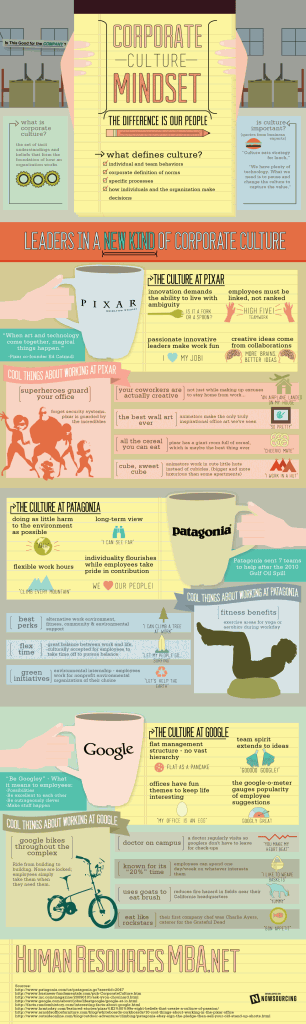
Other companies are starting to embrace what would have previously been considered unconventional freedoms. Take Google’s 20-percent time, for example:
We offer our engineers “20-percent time” so that they’re free to work on what they’re really passionate about. Google Suggest, AdSense for Content and Orkut are among the many products of this perk.
Last but not least, I had a chance to reach out to Melanie Nathan from Canada Internet Video company, Statusfirm:
“Although I work for an organization that not only understands, but fully supports Social Media participation among its employees, there are still some challenges to overcome. Finding a good balance between daily duties while still being attentive to social media profiles is often difficult. Proper time management skills and an ability to focus are therefore essential. Without them, your employer may consider it all a waste of time.”
So, my friends – of course there are legal and HR implications, but if you are going to give your employees access to the Internet, you’ve got to be prepared of the consequences, and welcome them!
Posted in Social Media | 13 Comments »
Friday, April 4th, 2008

This post is inspired by Dave Gorman the UK comedian who is known in the UK for looking for other Dave Gormans amongst others and in America as the stats guy who occasionally appears on the Daily Show. Dave Gorman was recently featured in a TV show where he traveled across America only to make it far more fun he choose to travel without giving any money to “The Man”. “The Man” is the large faceless corporations that seem to be pandemic across the western world from Starbucks to Wal-Mart to IBM “The Man” is everywhere. If you haven’t seen the film or read the book go do so now!
So can you market a site without “The Man”?
Dave was on Radio 2 the other day (yes I am an old fart) promoting his book and he got me thinking with Tad’s ranting on Google doubled with people’s general dislike of corporations is it possible today to market your site without the aid of these large groups.
Well, let’s find out!
Domain names and websites
It’s actual impossible to create and market a website without giving to the man. Since the domain registration system is run by a large corporation and while ICANN the global governing body is a non-profit corporation in the US nearly every national registrar is a faceless corporation. However all is not lost and with a quick tweaking of the rules finding a mom and pop registrar which is reselling a big boy is possible. Hosting its still possible to find small hosting centres just remember to avoid the big boys 1&1, Pipex, etc.
Obviously the site itself can be hosted on good Linux systems and open source software, just remember to avoid Fedora (RedHat) and SUSE (Novell) one thing you might have not thought about your Feedburner, and Google Analytics will have to be put to one side.
Search Engines
Sorry these are all out, at least the big 3 indeed to be truthful to the goal we probably need to block them totally so out with your robots.txt file.
User-agent: Googlebot
Disallow: /
User-agent: Yahoo! Slurp
Disallow: /
User-agent: msnbot
Disallow: /
Without search engine traffic we will have to rely on other forms of advertising the obvious answer is social media!
No StumbleUpon
Sacrilege I know but life without the man includes life without StumbleUpon which of course is owned by Ebay it also means life with out PayPal again an Ebay company. Interestingly a quick search for ways to stop people sending traffic from StumbleUpon returned virtually no results but fear not we can use HTACCESS to send this unwanted traffic away.
RewriteEngine on
RewriteCond %{HTTP_REFERER} (stumbleupon.com) [NC]
RewriteRule (.*) http://www.stumbleupon.com [R,L,NC]
Ok that’s sorted the StumbleUpon traffic it’s now being sent back to StumbleUpon of course thinking with our marketing head we perhaps would want to send it to a page explaining the idea of not getting traffic from “The Man” and with a link for them to find their way back!
Digg
Tricky one this is Digg owned by the man? I think not so it’s safe to market their maybe an article on how to block the evil corporations and “The Man” would go down well just a thought.
Propeller
No chance with it’s Netscape, AOL, Time Warner, Google owners this is clearly the sort of corporation we are looking to avoid so no Propeller traffic once again we will want to redirect users. Normally we would have to come up with some complex strategy to still gain benefits from these links to help our search engine strategy but for once this is not an issue as we blocked them at the start.
Myspace/FaceBook
Sorry News corp but you are the sort of people we want to avoid as for Facebook with a turnover of $15 billion according to Wall Street Journal and with investments from Microsoft and at least 3 major Venture Capital groups looks like your out to.
Looks like the man is pretty widespread but let’s not despair all is not lost we live in the age of web 2 where every kid and his programmer have an idea and the number of start-ups are immense it is still pretty easy to drive some traffic without going to the big corporations.
But why do it?
We are creatures of habit it is worth looking at other sources simply to have a backup strategy it’s also good to support new ideas what is new today may well be the norm tomorrow so it’s better to be in on the ground floor.
But the spirit of independent entrepreneur is being eroded once it was about coming up with a great idea marketing it and amazing people. Now its come up with a concept, get large venture capital company to fund your lunches with Google’s reps.
The next step
First off all I am not advocating giving up traffic sources, or blocking Google on your sites but I am passionate about supporting the little guys who are just like me. So I do plan on setting up a “Man” free site with the whole purpose of finding new traffic methods and ideas.
If you got any ideas or if you think that I was being lenient by claiming Digg was not “The Man” why don’t you let me know below!
p.s Dave Gorman book and DVD is available from his site and Good retailers as is his GoogleWhack stage show DVD (Not suitable for children) if you take nothing from this post go read the books and watch the DVDs!
Posted in Rants, Social Media | 10 Comments »
Saturday, January 19th, 2008
Do you use Google? Do you think they are nice and friendly? Do you assume that what is good for Google is good for humanity as a whole? I don’t. Here is why: The top 12 reasons to distrust Google.
- Google supports and implements censorship measures in nondemocratic countries like China
- Google search is almost a monopoly in some countries, it already is one in others (in Germany more than 90% market share)
- Google records and collects all your personal and private data about you and your interests, you might think twice what you search for in future
- Google earns huge money off splogs (Spam blogs) and MFA (made for Adsense) sites with no real content
- Google employs students to manually clean up the search results, they will kick out sites they might deem spammy even if they’re not
- Google is literally a black box company and accountable to nobody, we simply don’t know how exactly they manage our most precious asset: the knowledge of humanity
- Google does not communicate it’s most controversial policy officially but via the private blog of a cat lover
- Google owns one of the biggest US SEO companies, now isn’t that a conflict of interest?
- Google will disclose your private data or IP to identify you even to authorities of non-democratic countries or in cases where people are guilty of free speech
- Google is one of the biggest multinational corporations along with the likes of WalMart and Exxon, it’s owners are two of the richest capitalist on earth
- Google discontinues services like Google Answers or the Google API without prior notice to it’s employees who are then laid off
- Google uses the same rhetoric as the Bush administration: We’re not evil, (the other are)
Now think twice if you as a netizen and/or webmaster want to rely solely on Google products and traffic. Why not instead look out for some alternatives? People, let’s unite for a more social and democratic media. Don’t trust robots, trust humans.
I am Tad Chef and I will enable you to venture beyond Google on my SEO 2.0 blog.
Posted in Rants | 24 Comments »
Friday, December 7th, 2007
Tim looks at why becoming a news blogger is hard work and how simple changes to page layouts and designs can attract and promote your news blogs or any site even if he doesn’t use all the tricks himself.
Most bloggers dream of becoming a major source of news and information, millions of visitors and loads of links when you break yet another story. The pace is fast and furious with near daily race to be the first to get the scoop much like traditional media journalism. A vast quantity of front page traffic on Digg and other social sites is from the same websites time and time again but breaking into the exclusive group of true news bloggers is hard work but I hope some of these handy hints will help.
Why do it?
Before we go further you need to stop and take a step back becoming a news blogger is not suitable for all but a minority, go back to those top sites and you will realise nearly all of them are run by a team. With 24 hours in a day a single person can only do so much, and such sites rarely pay for themselves until they reach a certain critical mass. That said the one page tips I’m presenting will help any blogger interested in attracting the social media visitor.
Getting the page ready
How you present your exclusive story will often make or break your site above all you want people to know what the story is as quickly as possible, using stumblers as our basis you have 5.5 seconds to impress or they are gone.
Images
In many ways are the secret weapon of the news blogger and bloggers in general they add something to the story but they are also a useful social media tool.
Primary Image – this is the main image to accompany the article for maximum effect you want to turn this image into a promotional tool, when people photo blog a review on StumbleUpon the chances of a visitor clicking through from the reviews home page is 25% more likely then a standard review. To maximise people using the image as a photo blog picture make sure the image is under 250k and less then 500px width. Include some sort of identifier and don’t be afraid to include words (just make sure you use your alt tags correctly). When it comes to picture nearly all social media users like BBS big bold and simple a slightly risky strategy is to place the primary image just on the fall of the page to force the user to scroll down to see all the image.
Logo Image – A logo image is an image that appears near the top of the post to help categories and give a post a sense of identity, this further helps to cement in the visitors mind what the article is about as well as providing another promotion point. Google news has for a while now been using an algorithm to select suitable images for use within its site for relevant headlines, this sadly may not interest most wannabe news bloggers who don’t make it onto the Google news pages but the use of such images on Digg certainly will. Since the release of the new picture enabled Digg, users when selecting stories have been offered the option of including a picture from the page if and when a suitable image has been found. 
The important thing here is getting the scale right Digg currently is resizing images to 160×120 pixels and is only presenting users with the option of JPG so the ideal logo image should be 160×120 JPG, of course you need to make it interesting enough for the submitter to include it and remember to keep it inoffensive to avoid moderation.
Extract/Summary
Many Stumblers and Diggers simply copy the first few lines of an article when reviewing/submitting so make those lines count. Present an interesting and complete first 2 sentences be it a summary or some sort of opening statement. Just remember to keep it short and sweet otherwise the submitter or the site they are submitting you to will cut it off mid flow.
Typography
I am not a designer but subtle use of modern design concepts such as the use of grids really helps a story along. Don’t let a bad design or typography let your story down because it makes the process to hard to read. One technique borrowed from traditional magazine I find extremely useful is pull out and block quotes. While block quotes have a dedicated tag in html pull quotes do not but there are plenty of Javascript pull quote scripts you can use.

Printing
People still like something tangible so along with good typography a clean way to print the article out is essential at minimum a print.css but also think about promoting printing through a print button.
Social media buttons

Adding pretty icons and badges has been all the rage for a while now even the BBC have got social media badges on some of their pages, but there is no real evidence that this “bookmarking” buttons actually increase the number of people bookmarking sites and can have a very negative effect. On the whole social bookmarking do not cause any ill effects with possibly two exceptions
0 Diggs – Nothing says newbie who can’t fix their template then a Digg button with 0 Diggs, it’s a complete turn off. Social media users tend to flock or hunt in packs a button with a low score can put people off, If you are going to use Digg buttons then only place them on your post at the 20+ mark and make sure you remove them after a few days or immediately after your article is buried no point wasting your users time which could be spent viewing more of your content. You will of course point to the bottom of this page and scream hypocrite what else can I say but bah!
Stumble Me buttons – When StumbleUpon produced a series of buttons people raced of to use them on their blogs without thinking through the consequences. Call it a bug or a protection feature if you like, but Stumble Me buttons are worthless. Every time a user uses your stumble me button to leave a review you lose a potential thumbs up. This is because when you leave a review it does not also thumb up the page as well, so while you might get a couple of hits from peoples home pages on StumbleUpon you will not receive any additional toolbar traffic.
General tips for news blogging
Apart from on page issues some simple things make a large difference in News Blogging
- Work in a team
- Be quick but accurate
- Moderate your comments
- Let others promote you, concentrate on getting the stories
- Don’t be afraid of scrapers always include good full internal links
- Be consistent unlike other forms of blogging news bloggers need to post regularly
Do you have what it takes to be a news blogger, and what type of news blogger are you a
broad sheet or a
tabloid?
Posted in Productivity, Social Media, Tips & Tricks | 7 Comments »
Friday, November 16th, 2007

Steampunk laptop by Datamancer.net
Some people are hopelessly late. Are you one of them? Many people still think that
- search engine submission
- meta tag optimization
- keyword stuffing
- PageRank
- link exchange
and similar SEO anachronisms straight out of the nineteenth century will get them website traffic and make it an authority. Wake up, you have been asleep for more than a century. Stop practicing steampunk SEO tactics and start dealing with the future or rather the current web, web 2.0
In web 2.0 we also speak of the social web. The social web is not a web of spiders anymore, it’s a web of humans. Yes, people like you and me. Webmasters, bloggers, social media users, readers, people who seemingly do not contribute anything but click.
Something radically changed. And you were asleep. You didn’t notice it while you were exchanging links in your footer, watching your pagerank bar and adding three different synonyms of the same word into your page title.
Maybe you have been on Digg, Flickr or YouTube already and you read some blogs like Boing Boing.
If you want to succeed in todays web memorize some more of these names:
- WordPress, Drupal
- MyBlogLog, BlogCatalog
- StumbleUpon, Yoono
- BlogRush, CLIQ
- Mixx, BloggingZoom
- Facebook, LinkedIn
- Twitter, Pownce
Just to name some of my favorites and some sites you just can’t ignore anymore…
But it’s not just about the sites, the brands, the latest hypes.
It’s about you. But it’s not only about you. It’s also about your peers, about your neighbours, your friends or even your competitors!
While you depended on the new deity, Google, the world has moved on.
While you removed links to other sites so that you do not loose PageRank others have been linking generously. While you did not sleep at night watching your PageRank bar in anxiety others uninstalled the Google toolbar. While you were determining the ideal keyword density others were socializing with their peers. They were creating relationships, building up power profiles, connecting with their colleagues around the globe.
They rank in Google above you, as a side effect, some of them do not even have PageRank but they not only outrank you but their traffic is ten or hundred times bigger than yours. They even link their own competition as you call it. Either you do it too or you’ll be forgotten and marginalized. Start now. Read on. It’s not too late yet. Be friendly to your peers. You depend on them.
Posted in Social Media | 30 Comments »