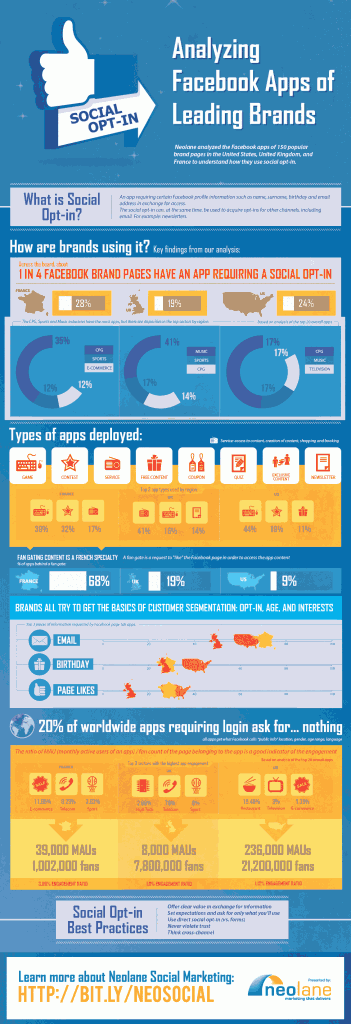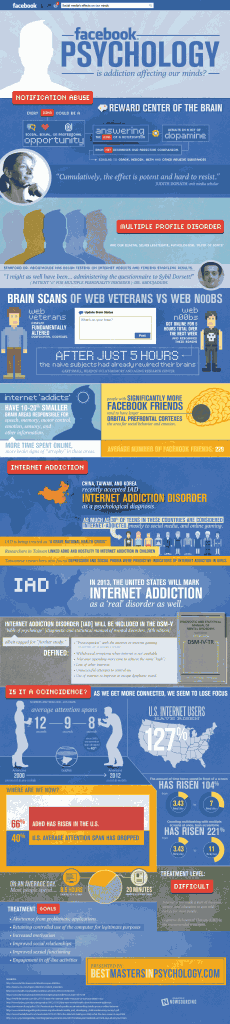

Today’s prevailing attitude about the free exchange information across multiple platforms and applications, known to many as Web 2.0 design, is causing users to take a hard look at what constitutes personal privacy. There are many pieces of information people use to conduct daily business on the Internet that shouldn’t be publicly shared, such as credit card information or Social Security numbers. Many are also concerned with the unintended consequences of content shared on social media channels like Facebook and Twitter. As these concerns show no signs of disappearing, they have become a key topic of interest for paralegal schools seeking to properly educate their students on how to approach this grey area in privacy law interpretation and application. With social media usage becoming even more widespread, more accounts of privacy violations are sure to arise.
The social media platform Facebook is designed to collect information from users and earn a premium from marketers paying for targeted ads. A March 2012 story published by ABC News reported that Facebook earned $3.7 billion in total revenue during 2011, contributing to a total profit of $668 million. These gains, earned by capitalizing on content freely shared by Facebook users, has led to intense scrutiny over users concerned about vague privacy information. Changes to the Facebook data-use policy, formerly privacy policy, in late March 2012 prompted complaints from more than 30,000 users, mostly German-based.
Facebook, compared to every other social media outlet, is the largest storehouse of many types of personal information on the Internet. More than 750 million Facebook users access their profiles at least once per month. Many of these users willingly provide personal information, including email addresses, age, name, phone numbers and other pieces of biographical information. Facebook also tracks a person’s web usage while logged in, storing information on their Internet activities. Facebook doesn’t automatically share information with third parties, but third party information authorization occurs every time a user downloads a new app or integrates Facebook with another service.
Social media can also cause privacy concerns in the real world as well as the digital realm. Employers have found it possible to research prospective hires through their Facebook page, revealing intimate information. A National Post story from March 2012 reports on the employer practice of asking for Facebook login credentials from users. Facebook has responded by saying that the practice violates the user agreement and could cause “unanticipated legal liability.” Until a suit is filed, though, there’s nothing to keep employers from continuing this practice. Government officials also have the power to access social media records with a subpoena through the Electronic Communications Privacy Act.
Access to personal information is an issue for many social media outlets other than Facebook. Twitter copies the address books of its users and stores that information in a database for up to 18 months. The reorganization of online Google services under a single privacy policy increased user anxieties over information shared across these applications.
Much of the work of protecting your privacy begins with your own actions, according to PCWorld’s Tom Bradley. “As a general rule, refrain from posting things online that you will regret later,” Bradley writes. “Odds are good that someone, someday, will stumble across it, and it may come back to haunt you.” Defining exactly what information you want to keep private and refusing to post that information online is the only way to ensure that your privacy will remain intact while using social media.
Drew Hendricks is a social media and SEO enthusiast that spends his free time browsing the internet and playing frisbee golf.
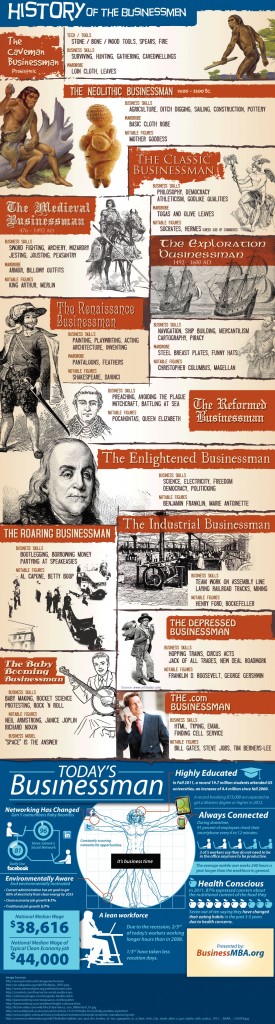
What do cavemen, William Shakespear, Christopher Columbus, and Mark Zuckerberg have in common? They were all shrewd businessmen in their time. Whether they were carving sticks, promoting plays, or trying to get funding to sail the world – these men have set the stage for where business is today, and where it will go. Business MBA’s new infographic does a wonderful job of putting these great men and their skills in order, and giving us an idea of where Generation Y will take us next.
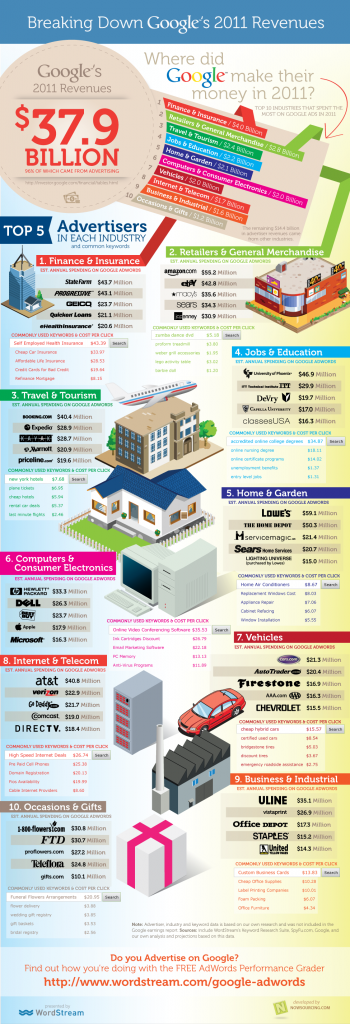
The number is out there, Google made 37.9 billion dollars last year. About 96 percent of this came from advertising. WordStream’s impressive new infographic explores which keywords were the most popular and whose ads made the search engine so much money.
It is no secret that so many of us want to have Mark Zuckerberg’s genius babies, and for the men out there, and the select few women who dont understand – this infographic will tell you why.
Symptoms Include: uncontrollable stalking, unintelligent use of new age acronyms in real life (e.g. OMG, WTF, LOL), unwanted relationships with people you have never actually met, awkward wall posts from parents that begin with she/he is cute and end with Love, Mom, emotional breakdowns due to an ex’s overwhelming happiness that is apparent on profile (see stalking), and in some rare cases deactivation from society.
If you are between the ages of 12 and 80, it is possible that you are a candidate for SNS – if you are between the ages of 13 and 35 it is highly probable. If you fall within this age range and have noticed that you suffer from three or more of the symptoms listed above, do not be alarmed, we are here to help.
The SNS pandemic began around 2004 when Mark Zuckerberg released Facebook and while over 300 million have been exposed to SNS only a select group is truly affected. In May of this year around 6 million people were cured of the disease and the future looked bright, until experts realized that the technology that caused the syndrome was being multiplied.
With the growing popularity of Google+ (or G+), it is possible that many more will become infected with SNS. Here are some ways you can prevent or take control of Social Networking Syndrome:
As technology grows it becomes more and more difficult to have self-control or any form of patience. Too much of anything can be dangerous. We recommend that you restrict your social networking time by allowing at least one hour between checking your Twitter, Facebook or G+ account.
Remember back in the day when you used to beg your parents to let you go outside and play? Now that you are older you can do this all by yourself. Get some fresh air, notice your environment. Don’t allow yourself to think about running home and checking your newsfeed.
If you have SNS it is very likely that you do not log out of your network when you navigate somewhere else or leave your computer. Try logging out and you will be surprised at how making that one little decision will send a signal to the brain that you are really done with this for a while. This hasn’t been scientifically proven yet, but it should be.
When your network sends you what others are doing or what is going on when you are not there, you lose all control. It is so easy to turn off, and once you do, you probably won’t even notice that you haven’t received 20 new messages in 45 minutes.
Trying to maintain all of your relationships on your social network is not the same as actually spending quality time with your loved ones. We propose that you set up a date with a friend and meet each other in the real world. Once you get back out there, you will remember what it is like to use all of your five senses again and you just might have a shot at a normal life.
We’ve all seen it. What once worked in social media six months ago doesn’t work now. Why, for instance, does a large following on Twitter no longer indicate influence? Or why is blogging no longer as impressive as it was in 2003? Both these examples follow a predictable economic formula:
As “x” social behaviour multiplies, its social value approaches zero.
Let me break that down for you. The more you do the same thing, people’s appreciation of it lessens. The more you do the same song and dance, don’t be surprised if your audience dwindles. This should be obvious, but it’s not.
LiveJournal: An Example
Most of us think of LiveJournal as the walking corpse of the social media world, but it wasn’t always so. It was one of the first platforms to combine blogging with social networking. More fascinatingly, people who had a LiveJournal felt it gave them status: in order to have one, you had to be invited.
Then it happened. Danga Interactive, LiveJournal’s parent company, removed the invite requirement. Soon everyone who wanted one could have one. This was the beginning of the end.
The problem was everyone wrote about the same things: breakfast, cute kittens, and favourite movies. LiveJournal succeeded in the task of being a journal, but as the novelty of public journalling wore off, so did its perceived value. Soon, users left LiveJournal for the unique feature set of MySpace — and we all know what happened to MySpace.
State of the Social Media Union
Most popular social media tools have their time in the sun then go through a slow rigor mortis. Usenet was once the reason people paid for Internet. Chatrooms were how people dated online. MySpace was a “place for friends”. What happened?
Everyone was doing it, and everyone was behaving the same way. Usenet became so burnt out over flame wars, the term “troll” was coined and “Godwin’s Law” became a law. The acronym “ASL” became such an overused greeting in chatrooms, their very purpose became sexual gratification. As for MySpace, “making friends” became the basis of many a Catch a Predator episode.
We are seeing the same pattern of behavior happen on Twitter, Digg, and Facebook — and if people keep doing the same things, those social networks will soon have less social value than they currently have now.
How Can We Add Value?
The social media slide into rigor mortis is not inevitable. The only way to reverse the lessening of social value is to give your audience value. That is to say, behave in a different way from everyone else. If a platform is flexible enough for innovative forms of communication, and if communities are courageous enough to move beyond their own cliches, social media can thrive.
Want to remain relevant in social media? Behave differently.
We are all used to “Sound Bites” – a short few seconds of words which are normally taken out of context to create sensational headlines. Few people realise that speech writers have for years worked on developing speeches to include a couple perfect “sound bites” for use by others.
Of course while some social media is audio based we are much more likely to rely on humble text to create a “social bite”.
What Is A Social Bite?
A social bite is a short piece of text to describe an article, post or idea which is easy to understand and easy to distribute through viral networks. A social bite must still carry the post’s message and goal but in a way that quickly impacts with users in essence:
A “social bite” is a short, concise and engaging message to gain traffic on social networks
The Perfect Social Bite
So what makes the perfect social bite, well it has two parts the hook and the line.
The hook are the words within the message – the thing to grab attention. This is doubly important as the hook will have no context once it has left the site. For example a hook is unlikely to reference the site so must be compelling, so that someone would visit the page without knowing where they were going.
The line is simply the url, sometimes this will be the page url but more likely to conserve space a url shortening service would be used. This compounds the need for a good hook as the only other potential reference to the site will be hidden.
The Twit Effect
Most social bites these days will have to pass through twitter at some point therefore a bite needs to be suitable otherwise people might change it. A normal tweet has a limited number of characters but while it may be tempting to use all 140 possible chars, this would severely limit the maximum potential of the social bite as it fails to take in retweets therefore the maximum number of characters is much more limited.
Twitter does not allow usernames longer then 20 characters and only shows usernames of 15 characters this means in practice to cope with every possible twitter name we would need to save at least 25 characters for retweets (20 for the name plus RT and two spaces one between rt and one after name and an ampersand before the name) even assuming 15 character names thats still 20 characters out of our 140.
With characters at a premium is it reasonable to expect usernames of 15 characters?
Taking a list of 1000 twitter usernames revealed the mean average length is 9 characters:
0-6 – 13%
6-9 – 58%
9-12 – 27%
12+ – 2%
taking these results its possible to assume the space needed for a retweet is 17 characters
Line Length
Assuming use of shortening service allows us to roughly determine how much room the line is going to take up. Its worth remembering users often swap out the url in favour of their own shortening service so as to gather statisitcs for themselves therefore even if your URL is shorter then the average it could be worth including a buffer.
Looking at various shortening services the average length is 18 characters including the http:// therefore the line length should be at least 18 characters plus a space making a line length total reserve of 19 characters.
Final Social Bite Anatomy
17 Chars
Reserved Space for Retweet
104 Chars
Hook / Message
19 Chars
ShortURL (TinyURL, zi.ma, cli.gs etc)
A hook within a social bite can potentially be longer than a page title, which in turn is not necessarily the same as a page headline.
It may also be important to allow for additional commentary to support the predetermined social bite, or to allow for SEO friendly URL shortening which can also boost response.
A single article can have multiple social bites that will attract different audiences.
Propagating a social bite
There are three routes to start a social bite on its move
Inject the hook without the line into your post article in much the same way as a sound bite works
Add the sound bite into the social networks yourself
Get someone else to do it for you
Of course you can always do all 3.
Many people reading this article may be thinking its very much twitter based but social bites have a tendency to cross social networks indeed that is the very point, and with social aggregators like Friendfeed and to a less extent Facebook something which starts on Twitter could well end up anywhere even getting to the ears of non twitter users such as myself
Do you use social bites? What other things should people think about?
Editor’s Notes (Andy)
Tim popped out to a bloggers meetup of Northern Gits Geeks, thus just adding a few additional references.
Dan Zarella recently took a scientific look at reteets over on Mashable
Louise wrote a similar article over on Twitip, but that was mainly aimed at retweeting tweets that originate on Twitter, where you know the length of your own Twitter usename.
Guy Kawasaki went into the psychological side of retweeting over on the open forum.
All too often, I come across blog posts that are simply a regurgitation of some breaking news or someone else’s earlier thoughts.
Shouldn’t a blog be more? I sure think so.
Sure, sure…content is king. But shouldn’t it be original content? As we are nearing the 1 year anniversary of Collective Thoughts, I wanted to share with you a peek into very selective process in finding great bloggers to head it up. The single most important factor was that each contributor was totally original and the real thing. You know it when you see it. That said, here are the aha moment that I had in when reading the work of my esteemed colleagues:
Andy Beard – For me, Andy has had more thought provoking posts than any of the contributors here, so it was really special for me that he’s part of the team. If I had to pick one post there, it would be the WordPress Masterclass post. An oldie but goodie, and may show many of you how little you know about WordPress after all
Dave Harry – While Dave is a relative newcomer to Collective Thoughts, I’ve been a fan of his writing for quite some time. The Sphinn awards got my attention – great way to get a community buzzing!
Mark Laymon – Mark is quite a character. For those of you that don’t know him, you probably know of him as the guy that relentlessly throws sheep and pokes you in Facebook. This post on getting a PDF to the front page will live on forever in my memory. I’ll bet every commenter on Digg had their jaw to the floor when it happened
Shana Albert – As we all know, everyone loves Shana. Shana is a rare talent that has an outstanding writing ability to capture the human spirit. She actually started writing on Collective Thoughts prior to the almost immediate debut of Social Desire. Would have to say that my favorite post of hers has been how social media is like high school.
Tim Nash – I believe that his name will forever be associated with StumbleUpon. Who can forget the Stumbleupon Algorithm post? No doubt that this was a different thought than the crowd.
What post has been the aha moment for you? We’d love to hear from you.
Of all the great news and views from this past week, by far our favorite is the announcement of Brendan Picha (from Squareoak) joining the Collective Thoughts team (welcome aboard Brendan)… Beyond that we have funnies, tri-dimensional conversations and hyper-connectivity to keep the head spinning and the belly aching. Also new this week is Tim’s idea that we each pass along some thoughts for the week… we hope they find you well.
Thought for the week; It’s always amusing to see the criticism of social media. Funny thing is, it usually comes from people that proudly display a few flashy badges that link to their social accounts. Upon further inspection, the critics are barely using social media.
Thought for the week; Social Media can be very confusing and even intimidating for the Webmaster or Small Business Owner new to Web 2.0. My suggestion would be to start with one Social Networking site/activity and start to know the community. Once you have done that you will be amazed how helpful the Community will be.
Thought for the week; I wanted to pass on the words of Chuang Tzu -
The purpose of a fish trap is to catch fish, and when the fish are caught, the trap is forgotten.
The purpose of a rabbit snare is to catch rabbits. When the rabbits are caught, the snare is forgotten.
The purpose of words is to convey ideas. When the ideas are grasped, the words are forgotten.
Where can I find a man who has forgotten words? He is the one I would like to talk to.
Thought for the week; It’s really, really easy to get caught-up in routine. Many end-up reading the same blogs, talking with the same people, watching the same news channels. From a creative and educational standpoint it’s very important to make breaking your routine a routine in and of itself. Try making unusual connections like how understanding the dynamics of an ant colony can help you understand social voting or if economic trends augment social behavior online. Inspiration for such thinking can come from reading a book you’d never pick up, watching a documentary you wouldn’t normally watch, or attending a lecture you’d never attend. Routine can have the ability to suck the life right out of you so make sure you get out there and embrace the unknown!
Thought for the week; Expanding your social graph to include peers you would not normally meet in an offline world may offer pleasant results. I have expanded my networking from social connections made online to solidifying offline at various MeetUps and conferences. If you are in the Miami area this weekend I will be attending both Social Media Camp and the Mashable party.
Welcome to the new wisdom of crowds. Each member of Collective Thoughts is here because not only are they a known or rising star in their own field, but they also have a passion and unique understanding on social media. Together, we make up Collective Thoughts. More